Back in the mid 1930’s Kurt Lewin described behavior as a function of the situation – as something we do based on what others’ are doing. We herd. Today, on reading that, most of us shrug uninterestedly.
But at the time it ran counter to accepted opinion. At the time it was expected we were all products of the experiences of our past. At the time there was no discussion of quasi-stationary equilibria, of field theory. At the time there was no discussion of the dynamic processes that can both constrain change and can be the consequences of it.
At the time there was no discussion of norms.
Today, not only can we discuss these things knowledgeably, but we can fillet them with the precision of a surgeon to show how you can create, and destroy, behaviour.
We turn to US drink-drivers courtesy of Charles K Atkin’s ‘Mass Communication Effects on Drinking and Driving’ for a perfect example.
” . . . drinkers underestimate the degree of social disapproval of drunk drunk driving (fully two-fifths believe that others excuse drunk driving, while just 5 percent of the public is actually tolerant) . . . “
Clearly, the gap between the perceived behaviour of the average person and the average actual 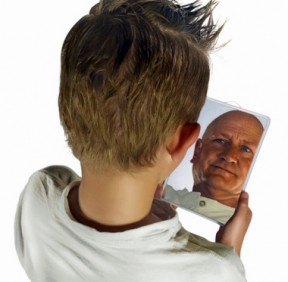 behaviour is large. It is also unknown (to the drink-drivers), which makes it stable – there is no reason for the drinkers to think otherwise.
But this is not the only perception-behaviour gap that drink-drivers have. They:
” . . . overestimate the statistical risks of both crashes and police apprehension (the typical driver perceives that the odds of arrest while driving drunk on a given evening are 1 in 100, while police figures show the chances are 1 in 2,000).”
Again, the gap between the perceived behaviour of the average person (policeman pulling them over) and the average actual behaviour (rarely getting pulled over) is large. There is no reason for the drinkers to think otherwise so it’s stable.
They overestimate tolerance, and underestimate getting caught.
With this information you could do two things:
1. You could decrease drink-driving by reflecting the higher incidence of group disapproval
2. You could increase drink-driving by reflecting lower chance of being caught
Turning the mirror on the person’s behaviour relative to the group forces change until a new balance is achieved. This is how normative functions create or destroy behaviour. They are stable, and balanced, unless new information about group behaviour is observed which is different to expectations; quasi-stationary equilibria.

For more on this speak with us, or have a look at our capabilities
Also, as co-founders and supporters of the London Behavioural Economics Network, join the Meetup group and Facebook group for more details and events
Related Posts

Reading ease is not as easy as all that – comprehension shows the way
It's easy to make text readable, right?…

The ‘Hollywood hello’ – and the importance of context when communicating
When communicating we all like to be as…
http://www.linkedin.com/groupItem?view=&gid=1…
[…] because prevalence drives behaviour by defining the norm. I have written about this here: ‘Mirror mirror on the wall‘; ‘Bin recycling: communications‘; ‘The media informs our choice in way […]
[…] Communication Effects on Drinking and Driving’ before in relation to norms and perception (Mirror mirror in the wall). We know that drink drivers overestimate the statistical risks of both crashes and police stops. […]